

POST FALLS
Where the Spokane River bends between forested hills and open prairie, Post Falls stands as North Idaho’s western gateway—shaped as much by water as by history. From Treaty Rock’s reminder of early agreements to the roar of Falls Park beside the dam, the river is always present. Trails, granite cliffs, and riverfront parks invite exploration, while I-90 brings travelers through this working, growing community rooted in its current.
POST FALLS: River City & Western Gateway
Where the River Powers a Town
At the Edge of the Current
Set along a powerful bend of the Spokane River, Post Falls is more than a waypoint between Coeur d’Alene and Spokane—it’s where landscape and history move together. The river carved a corridor through forested hills and open prairie, shaping a town defined by water, industry, and long-standing human presence.
At the heart of that story is Treaty Rock, marking an 1873 agreement between local tribes and the U.S. government. It remains a tangible reminder that this stretch of river has long been a place of meaning, movement, and exchange.
Downstream, Falls Park anchors the modern riverfront beside the Post Falls Dam, where the Spokane River shows its force—spilling, churning, and powering the system that helped build the town. The sound of rushing water and the hum of hydropower make one thing clear: the river isn’t scenery—it’s the foundation of Post Falls.
On-Ramp to North Idaho
The town’s rhythm follows the river: fast and cold in spring runoff, slower and glassy in summer, always central to how people explore and unwind. One quick turn off the interstate—like the exit onto West Seltice Way—and you’re suddenly in a river-driven landscape that still feels a little wild around the edges.
Its location just off I-90 makes it easy to reach and hard to rush through—about 10–15 minutes from Coeur d’Alene, 25–30 minutes from downtown Spokane, and within a half hour of Spokane International Airport. Practical, yes—but also the kind of place that invites you to stay a while.
Q’emiln Park
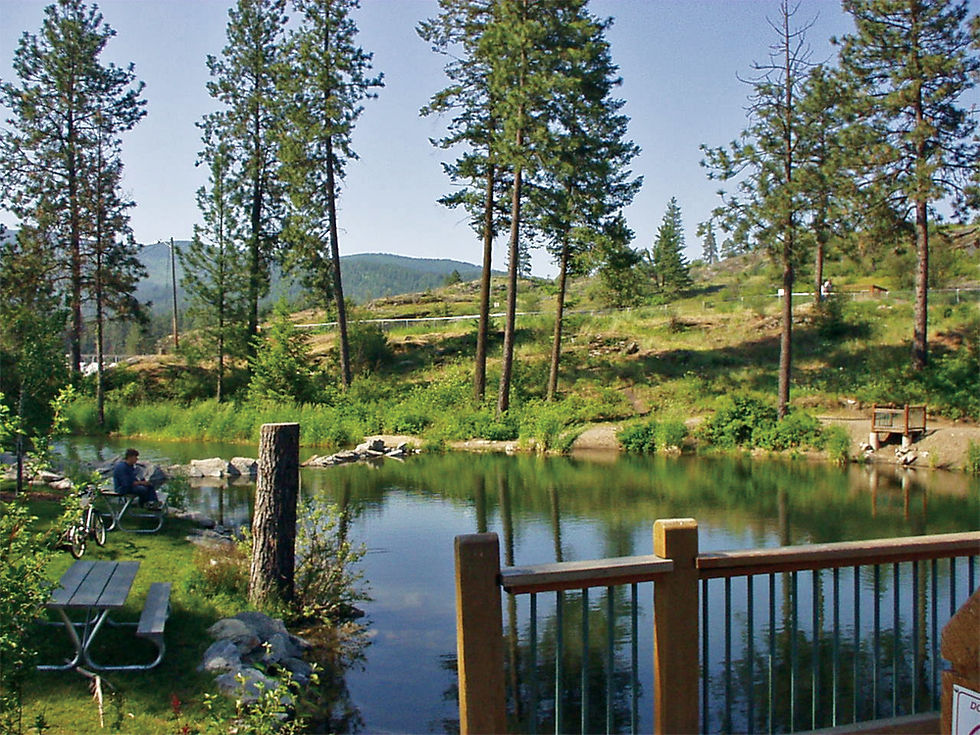
South of I-90, Q’emiln Park is one of the most dynamic access points to the Spokane River. Picnic tables tucked beneath the pines set the tone for slow afternoons, while a seasonal swim beach and public boat launch open the door to time on the water.
Rising straight from the shoreline, granite cliffs bring a vertical edge to the experience. With more than 100 climbing routes—from beginner slabs to technical crack climbs—it’s one of the region’s most unique spots.
When flows pick up in spring and early summer, nearby channels draw whitewater kayakers looking to train, play, and sharpen their skills in the current.
Falls Park, Treaty Rock & the Dam
Paved paths lead to clear views of the Post Falls Dam, where water spills in a constant, powerful display. It’s a place to pause, feel the vibration of the river, and take in the scale of what built this town.
Not far away, Treaty Rock offers a quieter moment. It speaks to a deeper timeline—one that predates the dam, the highway, and modern development. Even as access and interpretation evolve, its presence remains a reminder that this river has long been a place of connection, negotiation, and life.
Trails, Forest & More Parks
The Post Falls Community Forest spans more than 500 acres, with over 10 miles of hiking and mountain biking trails winding through forested hills. Follow the right path and you’ll find quiet shoreline stretches—perfect for a quick swim or a cast into cooler water.
Running alongside it all, the Centennial Trail offers a smooth, 23-mile paved route connecting the Idaho–Washington border to Lake Coeur d’Alene. It’s an easy favorite for riders, walkers, and anyone chasing a steady rhythm with river views.
Farther downstream, Corbin Park adds open lawns, picnic shelters, and a disc golf course to the mix. In higher water, the current here pulls in kayakers and rafters looking for a quick, accessible run.
Built for Movement
As the population has grown, so has the city’s infrastructure, reflecting a community investing in its future while staying grounded in its past.
Post Falls is a place where the current carries more than water—it carries history, energy, and momentum. From Treaty Rock to the dam, from granite cliffs to winding trails, this is a town built by the river and still moving with it.
For travelers heading into North Idaho, Post Falls isn’t just the gateway—it’s the first stretch of Idaho water worth slowing down for.


